-

Vincent van Gogh
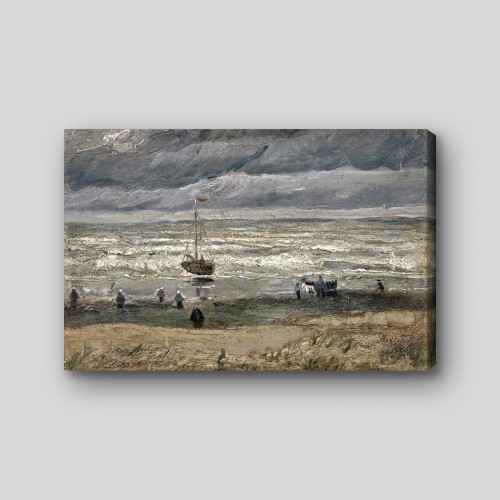
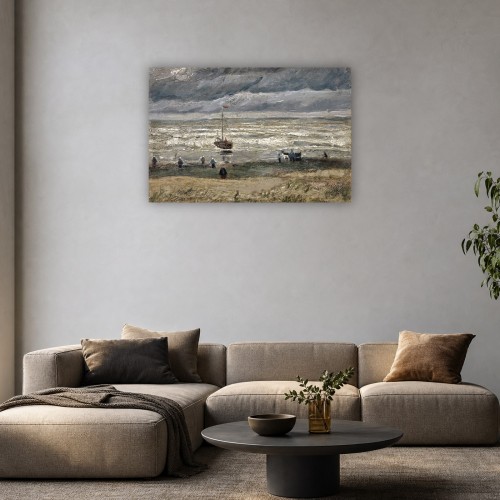
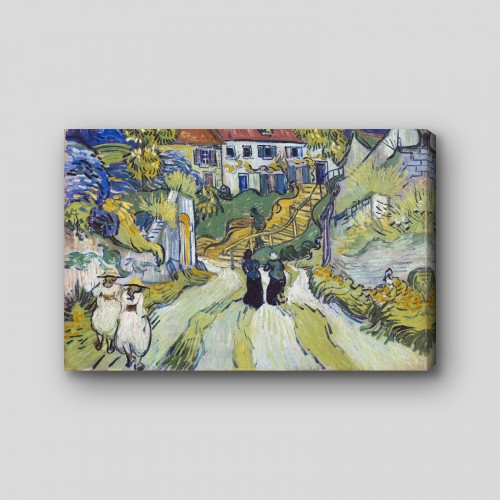
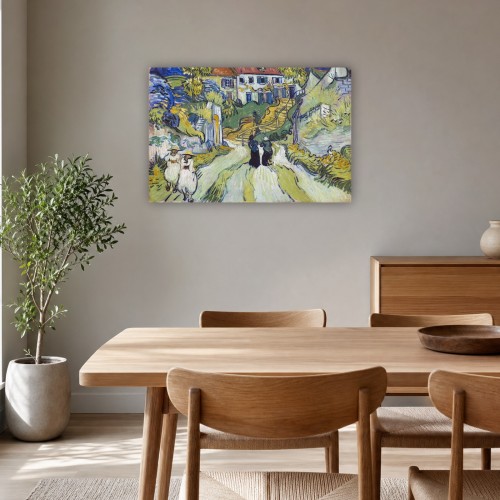
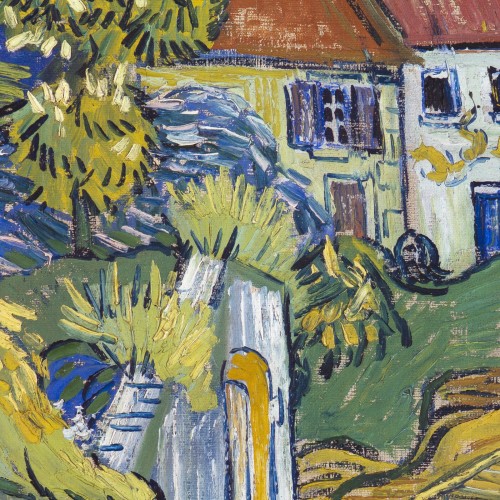
Vincent van Gogh is where colour stops behaving politely. His paintings turn wheat fields into restless waves, night skies into spinning weather, and a simple chair into an unexpectedly serious character study. Thick, visible brushstrokes leave the surface buzzing with movement, as if the paint has remembered every impatient gesture. Sunflowers blaze, cypresses twist, and village streets acquire the peculiar drama of a stage set after sunset. This selection of canvas prints gathers those bold rhythms and luminous contrasts: art that can make a quiet wall seem to have developed a pulse.
-

Henri de Toulouse-Lautrec
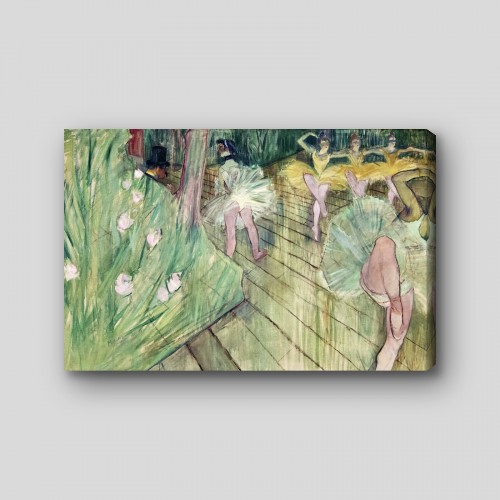
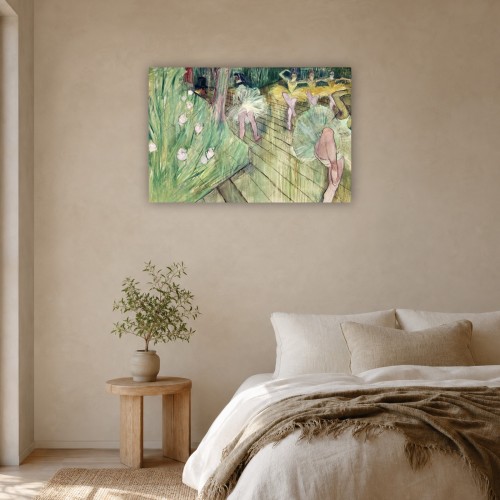
Henri de Toulouse-Lautrec belongs to the glow, racket and cigarette-haze of fin-de-siècle Paris, where cabarets became stages and posters learned to shout without raising their voices. His compressed figures, daring outlines and surprising blocks of colour catch dancers mid-kick, singers mid-note and night owls midway through a questionable plan. Japanese printmaking helped sharpen his famously economical visual language: a few flat shapes can make an entire room hum. This category gathers canvas prints shaped by Lautrec’s lively graphic world, from the Moulin Rouge’s whirling publicity to intimate portraits with the odd, electric pause of a backstage glance.
-

Leonardo da Vinci
Leonardo da Vinci is the category where painting shares a table with anatomy, engineering and a suspicious number of unanswered questions. His portraits hold their expressions like private jokes, while his studies turn hair, hands and drapery into investigations of light and motion. The famous calm is never quite simple: a landscape may dissolve into haze, a smile may refuse to file a statement, and a drawing can seem ready to test a flying machine at lunch. These canvas prints gather that restless intelligence in images shaped by observation, patience and a fondness for mysteries that have outlived their frames.
-

Sandro Botticelli
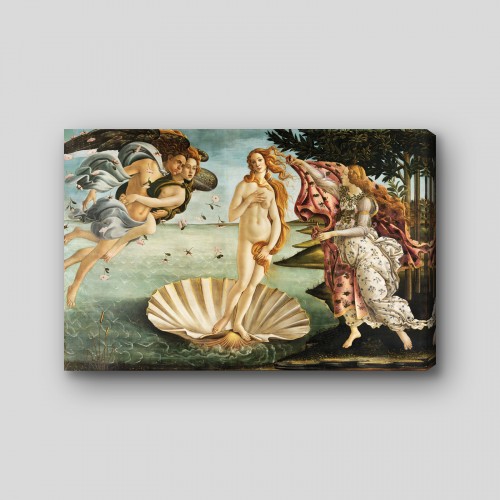
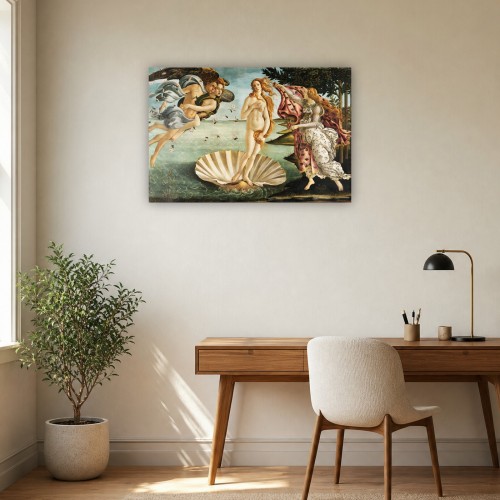
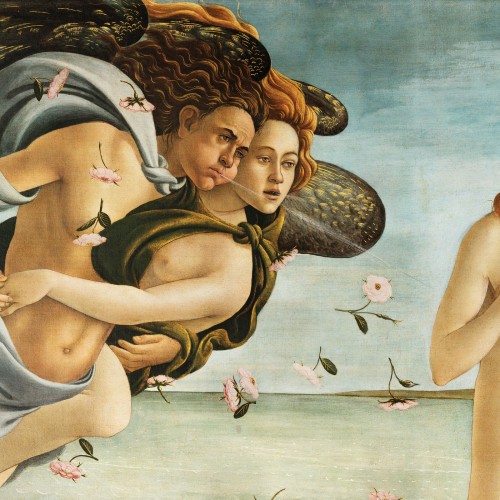
Sandro Botticelli’s paintings inhabit that deliciously peculiar stretch between Renaissance ceremony and daydream. Long-haired figures drift through gardens, myths step politely into Florentine life, and every breeze seems to have studied choreography. Venus may arrive on a shell, but the real miracle is how calm everyone remains about it. His fine lines, pale light and flowing silhouettes make canvas prints feel less like a loud historical announcement and more like a whispered myth with excellent hair. Religious scenes and classical allegories share the same measured grace: thoughtful, decorative and just a little uncanny.
-

Raphael
Raphael gathers the calm precision and theatrical grace of the High Renaissance into a category where every gesture seems to have rehearsed under excellent lighting. Madonnas, philosophers and angelic faces occupy ordered worlds of lucid colour, balanced architecture and famously composed serenity. Yet the calm is never sleepy: a hand, a glance or a fold of drapery can quietly rearrange the whole scene. These canvas prints trace that unusual talent for making grandeur feel almost conversational, as if a fresco had learned impeccable manners and then started telling stories. Raphael’s art remains a persuasive argument that harmony can be dramatic, and that even clouds may benefit from careful composition.
-

Edvard Munch
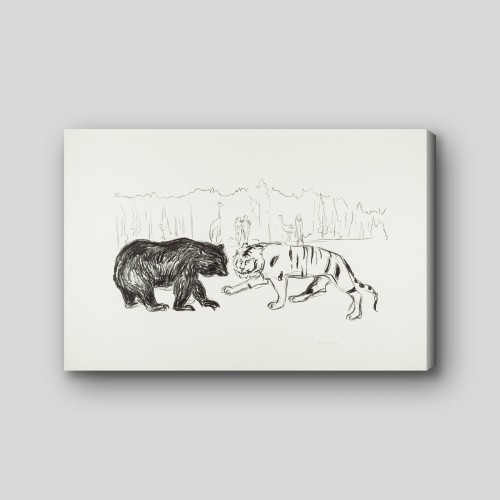
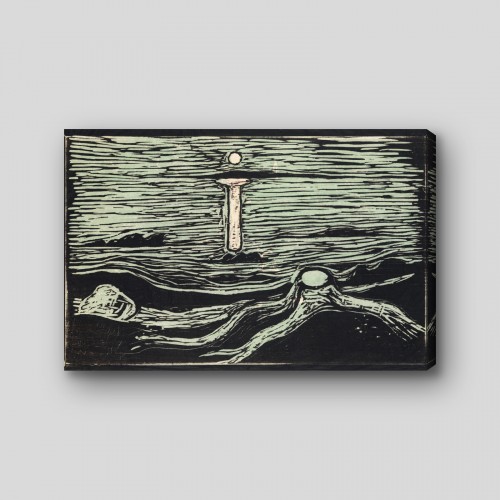
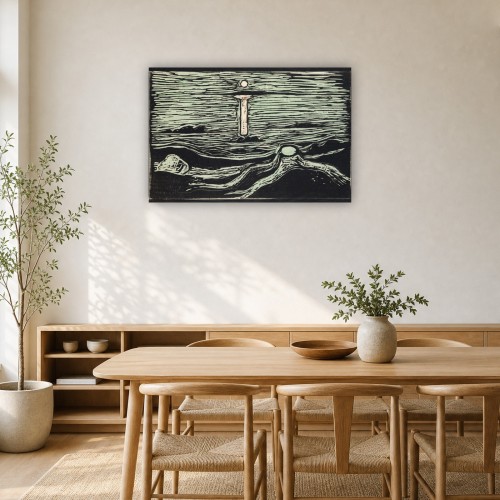
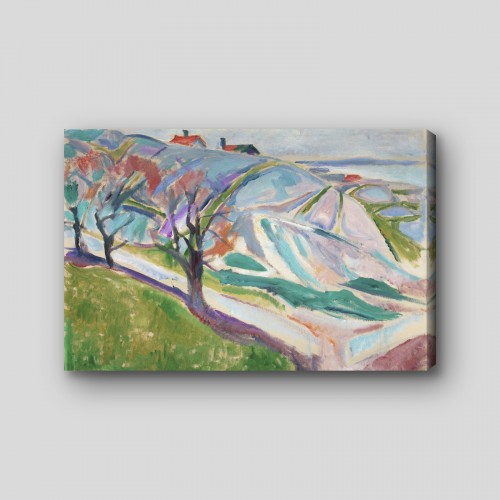
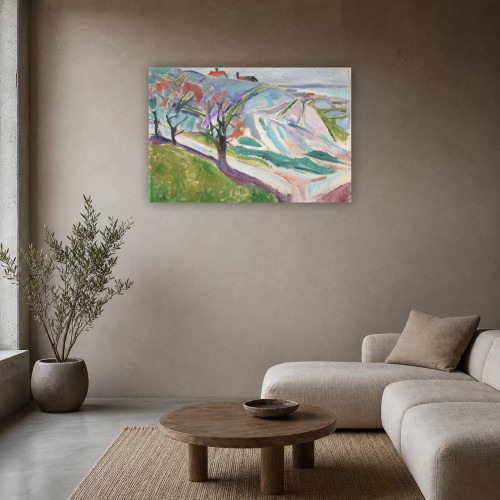
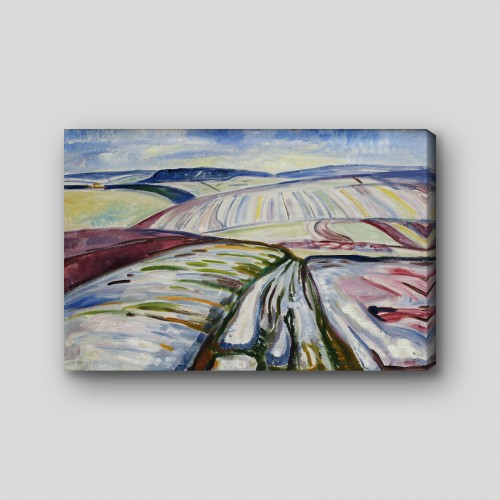
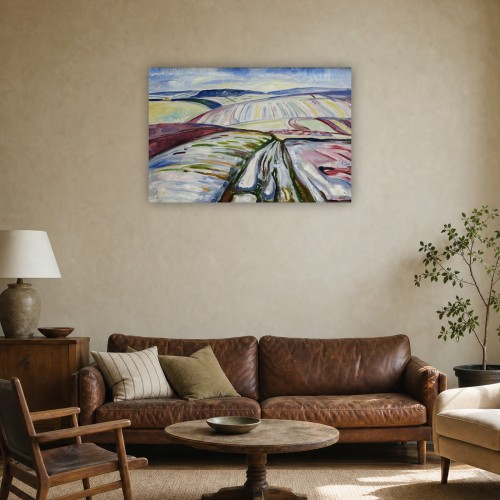
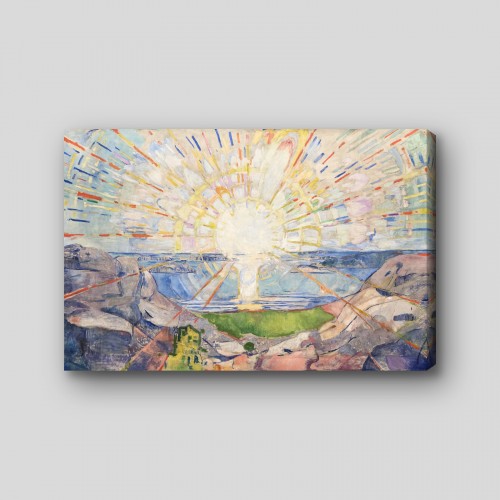
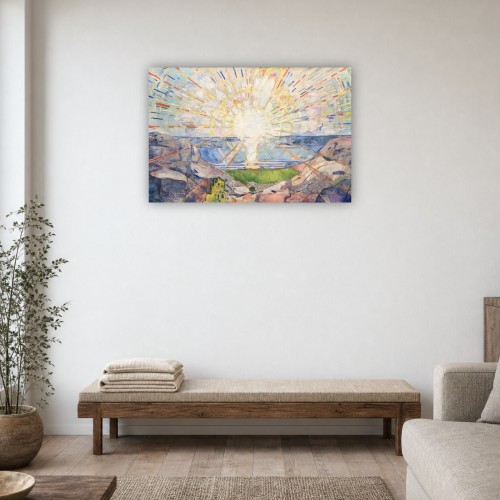
Edvard Munch’s art gives emotion a body, then lets it pace nervously through the landscape. Anxiety, longing, jealousy and grief appear as twisting skies, unnervingly bright colour and figures that seem to have heard rather alarming news from the universe. Best known for The Scream, Munch was far less interested in polite appearances than in the weather systems inside a mind. This category gathers canvas prints shaped by his restless lines, spectral faces and dramatic Norwegian horizons—images where a sunset can behave like a fever and a quiet room can carry an entire thunderstorm.
-

Franz Marc
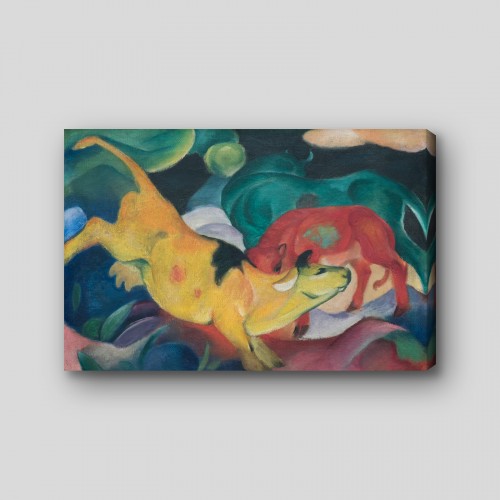
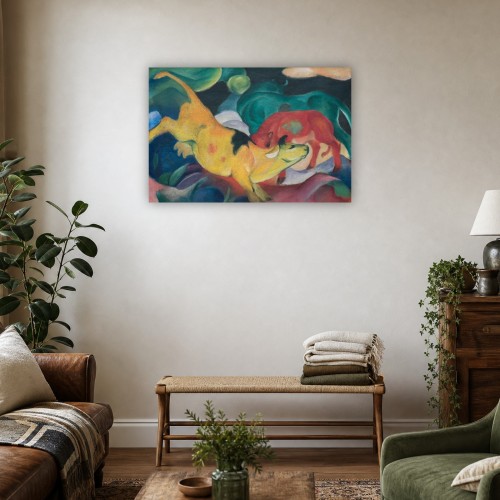
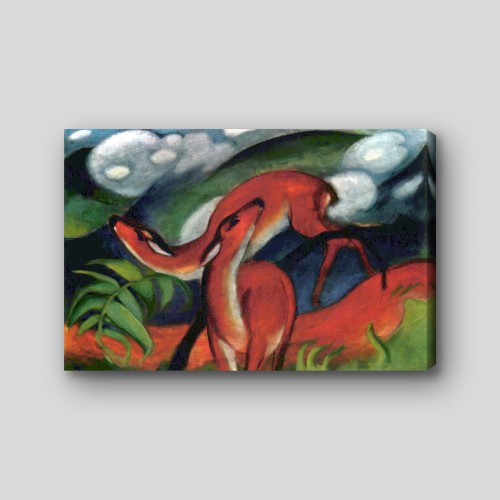
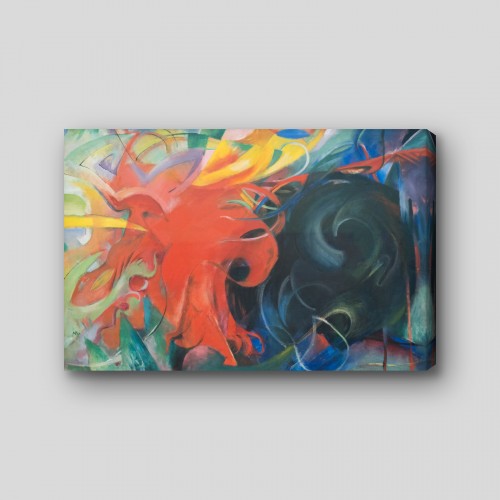
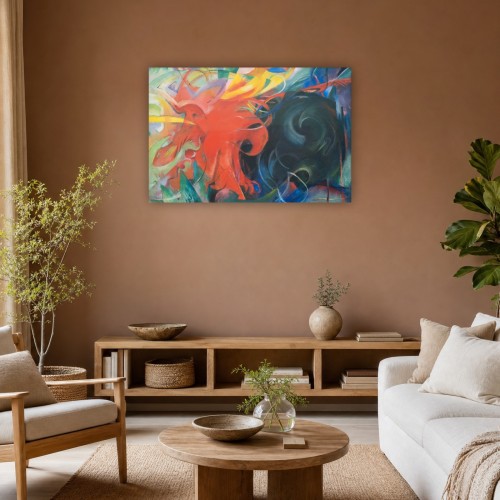
Franz Marc’s category is a small, electric zoo where blue horses, yellow cows and improbable deer behave less like animals than like weather systems with hooves. A central figure of German Expressionism and the Blue Rider circle, Marc treated colour as a charged language: blue could suggest spirituality, yellow warmth, and red a noisier, more dangerous pulse. His forms curve, splinter and surge through landscapes that seem to have swallowed a prism. These canvas prints retain that peculiar momentum, making each scene feel alert, as if the horses have just heard an excellent piece of gossip.
-

Claude Monet
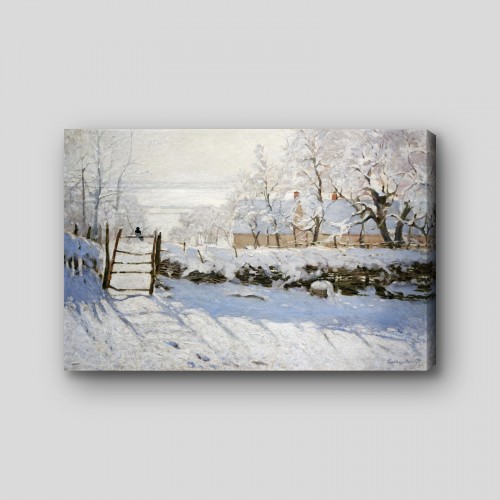
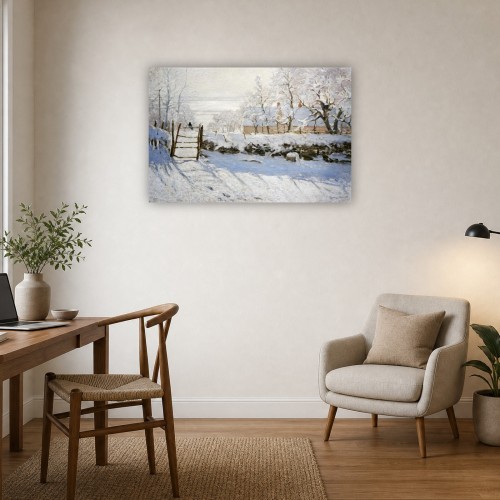
Claude Monet canvas prints gather a world where light behaves like a restless studio assistant: shifting the colours, moving the shadows and refusing to hold a pose. The category follows Monet’s fascination with repeated motifs—water lilies, haystacks, poplars, bridges and the façade of Rouen Cathedral—seen across changing hours and weather. Edges soften, reflections borrow the sky, and a pond can become almost abstract before anyone has finished naming the flowers. These works carry Impressionism’s quick pulse, yet their calm is deceptive; beneath the mist and pastel shimmer sits a rigorous experiment in how seeing changes from one moment to the next.
-

Berthe Morisot
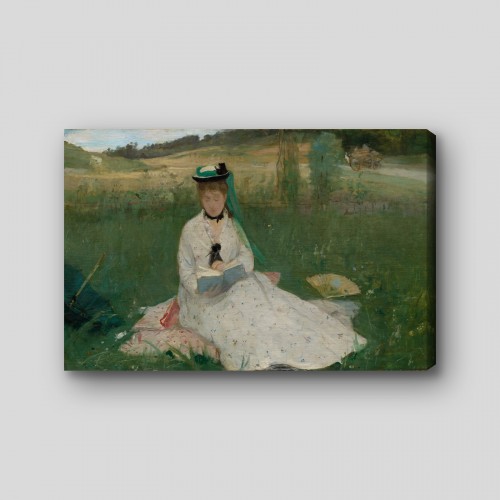
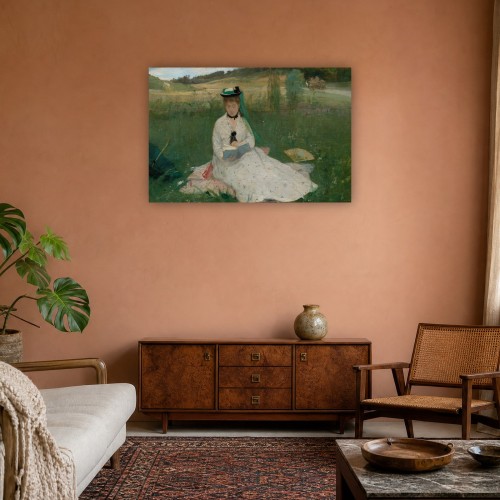
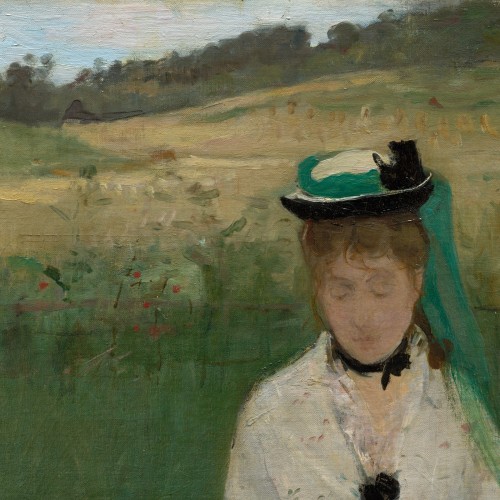
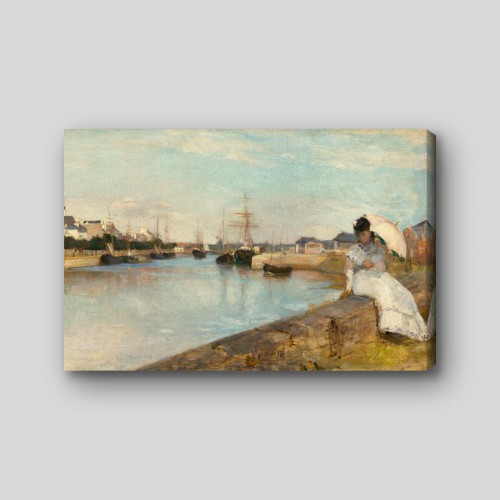
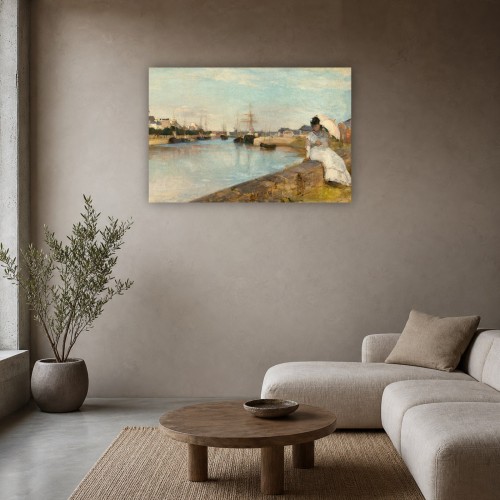
Berthe Morisot’s paintings catch modern life while it is still moving: a child turning away, a garden vibrating in pale light, a figure apparently midway through a thought. Closely associated with Impressionism, she used quick, airy brushwork that can make a scene feel both observed and remembered, like sunlight attempting to keep a diary. Her subjects often come from domestic and social worlds, yet nothing sits politely still for long; colour, fabric and foliage all have their own opinions. This category gathers canvas prints shaped by that lively uncertainty, where soft whites, silvery greens and flashes of pink turn everyday moments into quietly radical pictures.
-

Johannes Vermeer
Johannes Vermeer belongs to the quiet end of Dutch Golden Age painting, where a sunlit room can feel more dramatic than a cavalry charge. His scenes of women reading, writing, pouring milk or pausing beside a window are built from patient light, precise colour and an almost suspiciously tidy sense of stillness. Blue and yellow repeatedly stage their small domestic opera, while maps, pearls and instruments hint that ordinary life has secret footnotes. This category gathers canvas prints shaped by Vermeer’s famous calm: interiors in which daylight seems to have taken a deep breath and refused to hurry.
-

Rembrandt van Rijn
Rembrandt van Rijn makes darkness behave like a character: it waits in corners, swallows unnecessary detail and lets a face emerge with alarming honesty. This category brings his portraits, self-portraits, biblical scenes and quietly theatrical groups into canvas prints, where every crease, glint and raised eyebrow seems to be keeping a secret. Warm browns and sudden golds define the mood, while his famous command of light and shadow gives ordinary skin the drama of weather. Rembrandt rarely flatters, but he pays attention—and that may be the stranger compliment. Even stillness feels busy here, as if the painting has paused mid-thought rather than settled into silence.
-

Gustav Klimt
The Gustav Klimt category gathers images in which ornament behaves almost like weather: gold drifts across figures, spirals multiply, and patterned fabrics threaten to steal the entire scene. Closely associated with the Vienna Secession, Klimt combined flattened decoration with sharply observed faces, creating portraits and allegories that feel both ceremonial and strangely intimate. His landscapes are quieter but no less patterned; trees, gardens and water become dense mosaics of colour. These canvas prints retain that productive tension between surface and subject, as if geometry and human emotion had agreed to share one elaborate coat.
-

Katsushika Hokusai
Katsushika Hokusai canvas prints gather a world where Mount Fuji keeps its composure while waves rear up like blue-clawed sea monsters. Rooted in the visual culture of Edo-period Japan, the images balance crisp ukiyo-e geometry with weather, travel, labour and tiny human dramas. The Great Wave may be the loudest resident, but quieter landscapes, waterfalls, bridges and birds reveal Hokusai’s restless eye. His line can make foam look architectural and a mountain feel like a patient witness—proof that nature, in Hokusai’s hands, rarely sits still for its portrait.
-

Kitagawa Utamaro
Kitagawa Utamaro’s art gives the floating world a remarkably quiet intensity. Best known for elegant studies of women, he brought faces close, letting a tilted eyebrow, a comb or the fall of a sleeve carry an entire private drama. Fine lines describe elaborate hairstyles and patterned robes, while restrained backgrounds keep every gesture unusually sharp. In canvas prints, these compositions retain their curious balance of refinement and immediacy: poised, observant and never quite still. Utamaro seems to suggest that beauty is not a fixed expression but a passing thought caught before it changes its mind.
-

Alphonse Mucha
Alphonse Mucha made ornament behave like weather: hair streams, flowers multiply, and halos hover behind poised figures as if sainthood had wandered into a poster studio. His elegant lines and carefully staged symmetry became signatures of Art Nouveau, yet the abundance never feels entirely tame. Vines curl with suspicious purpose, robes form their own currents, and every border seems ready to continue beyond the frame. In canvas prints, the muted golds, dusty pinks and leafy greens preserve that peculiar balance between theatre, graphic precision and botanical daydreaming. Mucha’s world is decorative, certainly, but decoration here is not background noise; it has opinions, choreography and excellent posture.
-

Jan Toorop
Jan Toorop’s art behaves as if the line has developed its own nervous system. Faces emerge from dense curls, branches, halos and ornamental currents, while quiet figures can suddenly feel charged with ritual or mystery. His shifting visual language moves between Symbolism, Pointillism and the elastic elegance of Art Nouveau without settling politely into one chair. In these canvas prints, pattern is never mere decoration: it carries mood, rhythm and sometimes a faint sense that the background knows more than the people in front of it. Delicate colour and intricate contours coexist with an oddly magnetic stillness.
Active filters
- Size: 762 × 508 mm